
Falling off a cliff
Why dropping your training load leading into major performances could be limiting your PR's

Quick Splits
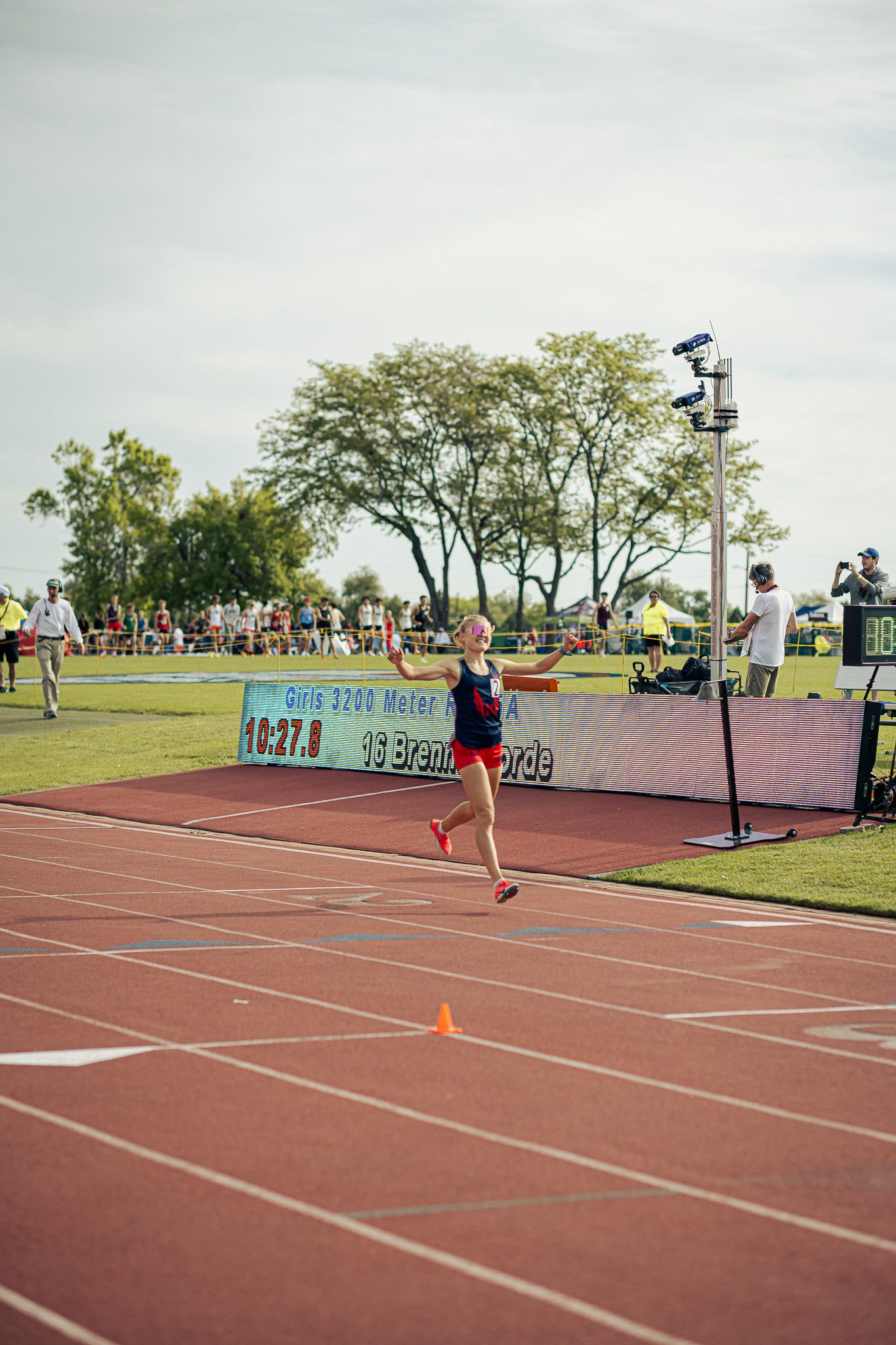
State by the numbers: We did amazing this Colorado State Meet closing out with 28 medals, 13 from Individual Distance Events, 8 from Individual Sprint Events, and 7 medals in relays. We had 2 event champions (Emry Schwalm - 5A 3200m, Sophia McCormick - 3A 400m) and 10 Top 3 Performances (Ernest Fields, Jackson Ferguson, Zac Southern, Evelyn Lapp, Emry Schwalm). This is all in part to excellent prep from the pre-season, great personal management in season, coaching from their school, and resisting the urge to pull back immensely in the days and weeks leading in.
Tapering for Better Performances
My thoughts on peaking, tapering, and personal performances comes down to this: Under pressure, you don't rise to the occasion; you sink to the level of your training.
Volume Reduction = Better Performance is Bunk
For years, I would pull back my athletes to 20,30,40% of volume and intensity under the guise of freshness in hopes that it would illicit a major response, and I got one! It just wasn’t the one I wanted…
Pulling back volume was a critical flaw in my program design and advice for years. The more research I dove into, the more athletes I coached - the analysis was very much against aggressive tapering models - especially for events where Vo2Max and running economy, and lactate buffering were the major factors. When we take a major drop in training load the research backs what I’ve noticed. When we taper aggressively - we show up dull, flat, and don’t illicit the results we wanted - a lifetime best.
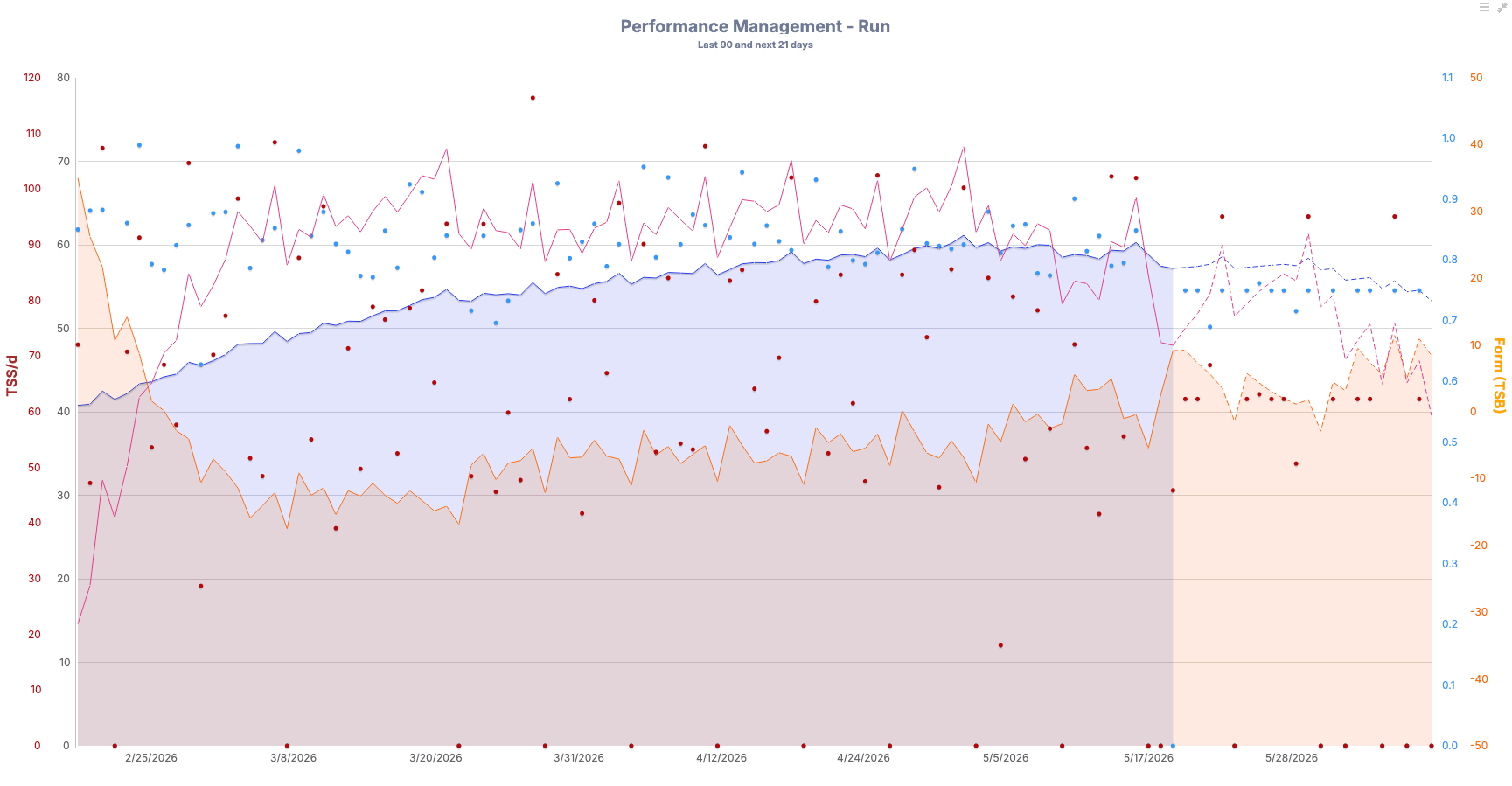
Tapering has one point of value - fatigue dissipation. This assumes one critical factor - you’ve been working under enough fatigue worth dissipating. Most importantly, dropping volume alone doesn’t create a magical physiological upgrade. The critical flaw I see from most coaches is they begin reducing training load 2,3,4 weeks out from the biggest races in hopes that they’re freshest. The reality is they are forcing their athletes to operate on fumes.
Pillars I’m Developing (What stays, what goes)
Volume is paramount. Maintain 95% of your easy volume in the weeks leading in. Your athletes have adapted to this stimulus. Removing this removes the very stimulus that got you success.
Increase rest on reps when critically close. The week of the race - change very little - keep in a workout at 95% intensity, if anything adjust towards more recovery on intervals and focus on specific paces
Pull away neuromuscular fatigue. You should absolutely still lift the week of major races - just be conscious of repetitive jumps and high-CNS stimulus movements
A consistent rhythm keeps you moving. The week of the race always present changes - new locations, finals, sleep disruption, stress. Find ways to create or maintain rhythms. Try to protect bed time, quiet time, quality time (people), and protect your peace (which protects your focus).
Concentration has a fatigue bandwidth. Your performance is defined by your ability to concentrate under fatigue during your race. Your ability to tune out the negative thoughts brought on under stress and fatigue is trainable. The better you are at managing fatigue - the better you can perform when it shows up.
Create systems and processes. Variables and constants are constantly variable. Teaching athletes how to build a pre-race routine, manage anxiety, allow them to manage the unknown when you’re not around. Your athletes should succeed without you around.
Researchers comparing a 38% reduction in training volume with a 5-10% reduction over 7 days found that only the 5-10% reduction improved time to exhaustion, suggesting the magnitude of the cut matters enormously. Coaches who interpret "taper" as a near-total shutdown are operating well past what the evidence recommends
So what do we change to illicit great performances?
If we’re not changing volume very much, and we’re not changing the stimulus very much, what are we doing to get a better result and get our athletes to the podium?
Rise to the Occasion
I love Nike Outdoor and the marketing ‘Hayward Magic’ even though it’s a giant lie. Kids are at the very end of the season at one of the best venues in the world for track and field. They perform well because the field is fast, they’ve got a ton of reps under their belt, and most importantly they want to succeed. The athletes who haven’t practiced performing under pressure or managing their emotions in a call room away from teammates and friends have a big chance of crumbling.
Practice setting mental expectations around uncertainty. This means talking about how to handle feeling lonely, feeling uncertain, and taking charge. Practice this by forcing them to lead reps, and talking about how to manage certain situations long in advance. Make it situational in practice as often as possible.
Pre-Race Routines - Everything from your series of dynamics, what songs you listen to, and what socks you wear to run fast - it all plays in.
Create comfort. You may be somewhere new but what can you do to create sameness in a world of newness? Think like a chain restaurant - how can I make this experience in Eugene just like Denver, Nashville, or Orlando?
Critical Stimulus and Training Priorities
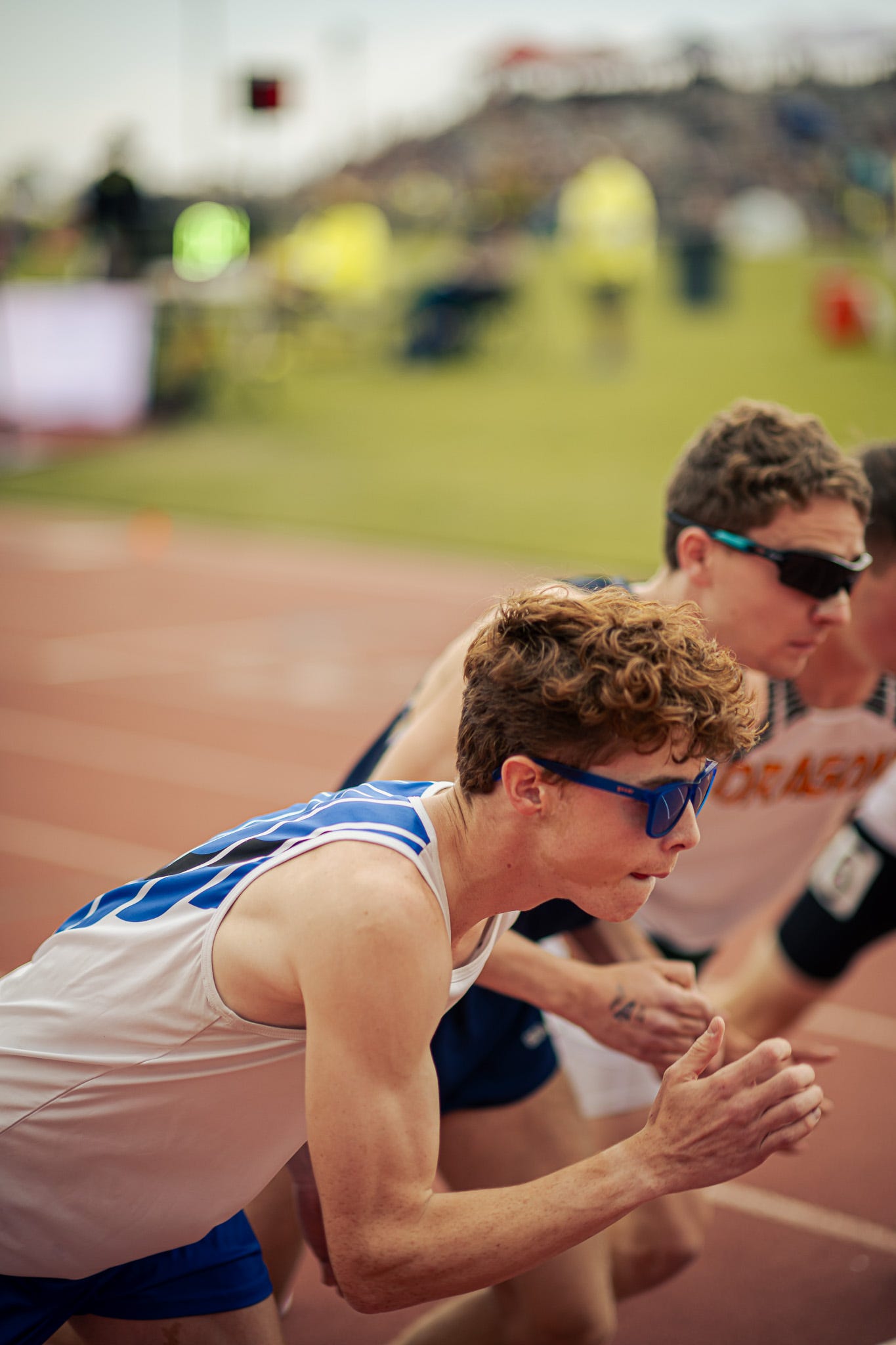
As we hone in on the race - you simply must focus more on intensity and specificity without losing key factors. One of the best pieces of advice I got from a coach was to shift your priorities in your workout towards freshness the closer you get to races. Not all fatigue is created equal and to hit your goal paces you need to be fresh but it doesn’t mean you can’t keep in core elements.
My athletes know that I like to have progressive layers in my workouts: (Aerobic Work) (Medium Work) (Fast Work). This could look like 2x 1km at CV into 5x 400m at Mile, into 6x 200m at 800. This a great for practicing paces and effort when your legs are tired. This is great until you’re wanting to hit specific paces on short rest and load up lactate - by the time athletes get to the 200’s in this session - their CNS could be really fried and dulled. So a more specific version might look like this: 6x 200m at 800, 3-5x 400m, 2x 1km at CV to close. This shifts the most specific elements to the front and flushes out the lactate with the longer reps to close. This has been a successful tool in keeping the training load and volume high enough to maintain fitness for a long season. You don’t have to ‘do less’ because it’s the end of the season.
When we think about the underlying premise: Under pressure, you don’t rise to the occasion; you sink to the level of your training. It’s not just about how you manage stress and pre-race anxiety - the premise is wound into the training you do every day.
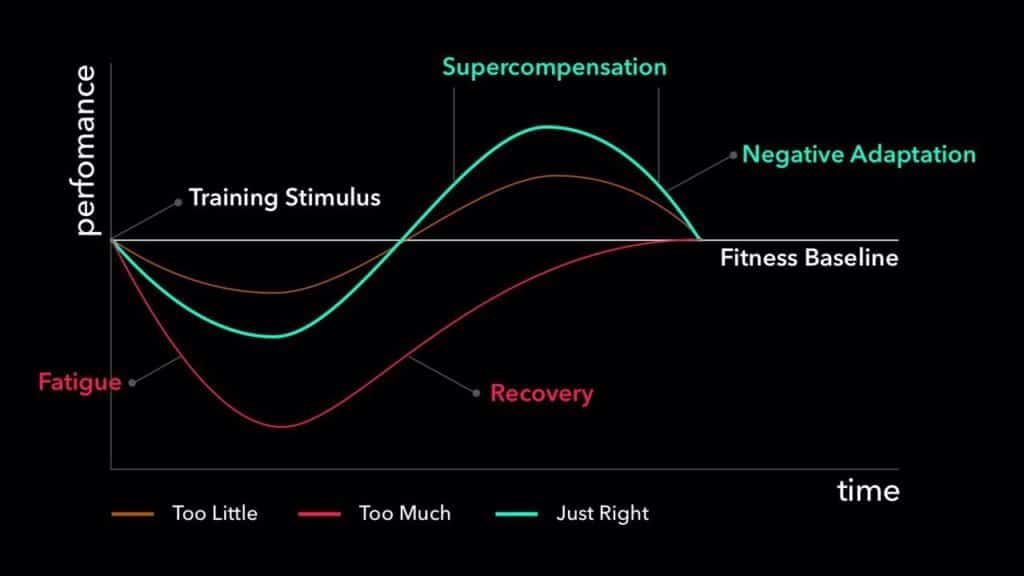
To invoke a true super-compensation - you need to have enough fatigue that backing off will create a response. I think of the taper as clutch pedal vs. a brake pedal. The clutch means you’re ready to engage at a moments notice - the brake mean you’ve decided momentum isn’t the priority. The best coaches know what an athlete can handle putting them somewhere between the orange line and green line to illicit a PR or training improvement. The higher level athlete you have - the more you get from back off just a few percentage points. An athlete running 60 miles a week dropping to 40 is seeing a 33% drop in load if you cut the intensity and make this all easy work too - they will show up as sharp as a circle and no good at running around one.
The “Trick”
The trick here is knowing that to get your athlete to achieve consistent green level performances you don’t need to lob off huge amounts of training load and stimulus. The same is the reverse, you don’t get a result by grinding your students into the ground then back off in hopes that taking them towards the breaking point and then backing off will guarantee a result. Physiology is individual, if you’re giving everyone the same thing - expect a mediocre outcome - take the time to understand the training level and ability of your athletes and tune accordingly and you can get great results - over and over again.
~ Coach Simmons